
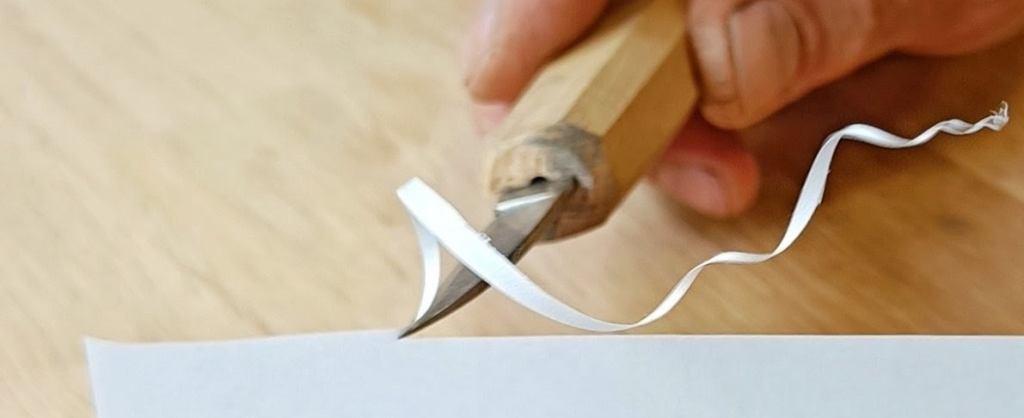
Universal tips:
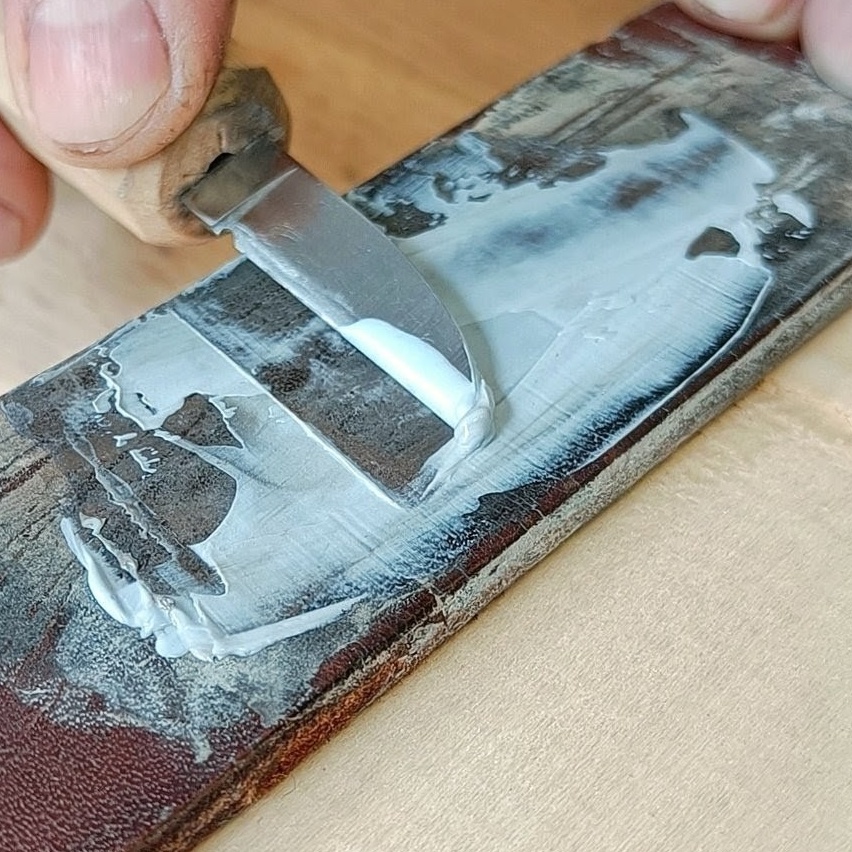
▪️You can maintain the edge using polishing paste on a piece of leather stuck to a flat surface. Polishing on leather is an effective way of restoring the blade’s sharpness; however, this process also gradually causes the edge to become slightly rounded. We use a whetstone if the edge has lost its shape, is rounded or nicked, and needs to be straightened.
▪️Before sharpening, soak the whetstones in water with a few drops of washing-up liquid. This prevents the ground-off particles from settling in the stone, as they then tend to corrode inside the stone. Keep the whetstone wet whilst sharpening.
▪️After sharpening on the stone, polish the blade on a piece of leather with polishing paste to smooth out the grooves left by the whetstone. Otherwise, these will prevent a smooth cut through wood. The blade should leave a shiny cut.
▪️A piece of leather, such as from an old belt, is sufficient for polishing. We can stick the leather onto a sturdy, flat board to create a simple leather strop.
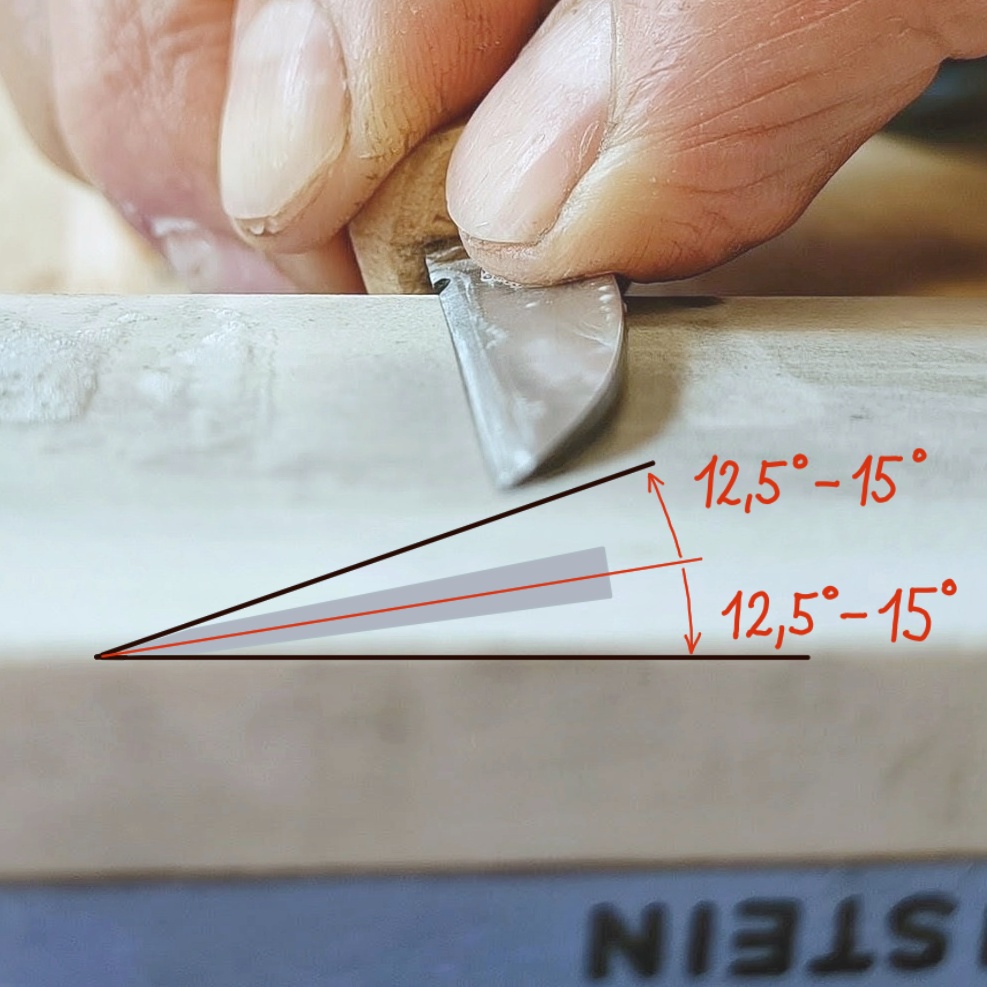
▪️When sharpening and polishing, it is important to check and maintain the angle of the cutting edge. It’s easier when holding the knife or chisel with both hands.
▪️When working with softer woods, you can choose a smaller sharpening angle. Chisel blades should be sharpened at an angle of 25–30 degrees. For knives, the angle is half that – 12.5˚–15˚ – relative to the central axis, evenly on both sides.
▪️Our gouges and chisels are sharpened at 25° and flat knives at 25° degrees(or half if angle is relative to central axis).
Further we will show:
- Vyštrbený nožík N2
- Rrydlo L6/8 s hrdzou na čepeli
- Tupé rydlo L11/1
- Lyžičkár 20P
Chipped flat knife N2
If the blade has unevenness, we recommend starting to sharpen on a coarser stone, such as the double-layered green Tyrolit F150/320, which will level the blade more quickly. Begin sharpening on the coarser layer of the stone. Continue with a finer stone, such as white Tyrolit, and polish the blade using Unipol paste applied to a piece of leather.
If the knife is merely dull, with no visible irregularities on the edge, simply sharpen it on a double-sided M-stein #3000/8000 stone or even strop it only with Unipol/shining paste.
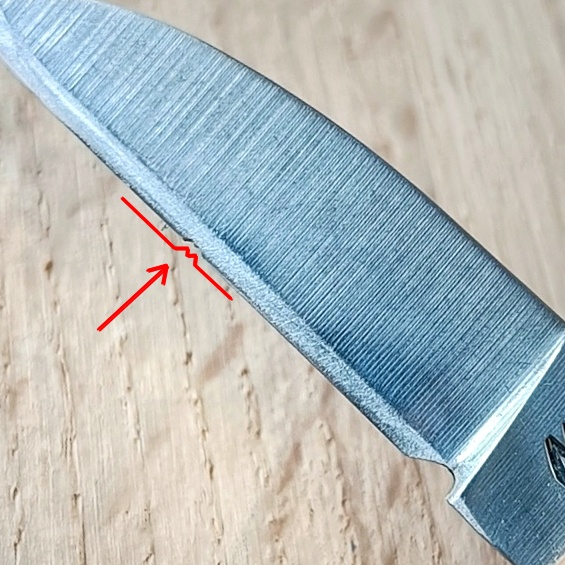
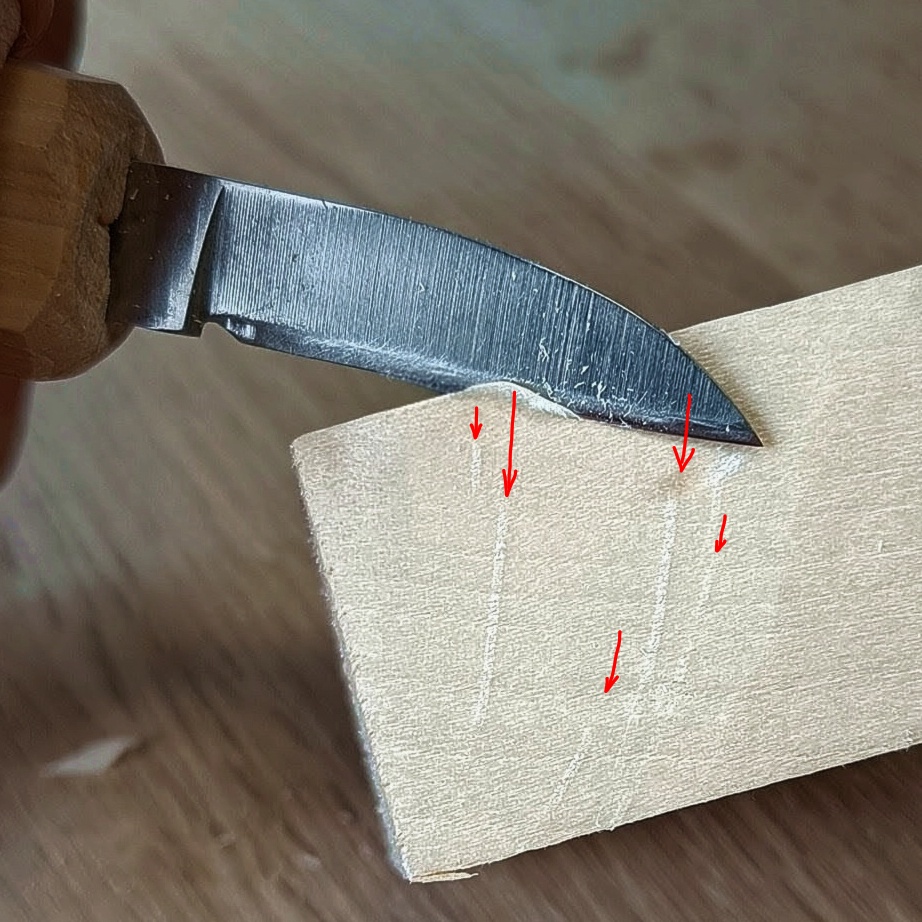
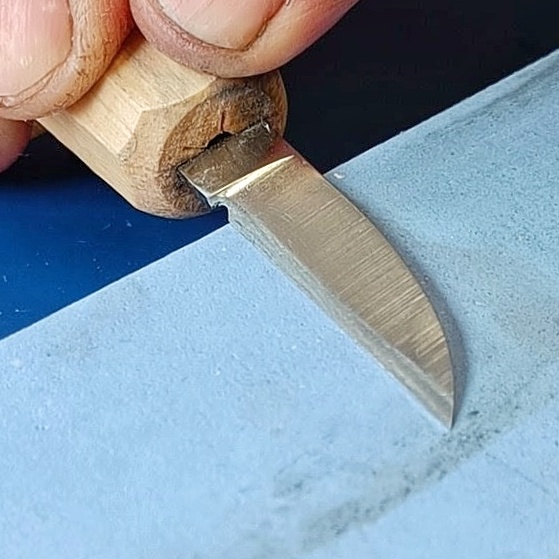
Gouge 6/8 mm with rust inside.
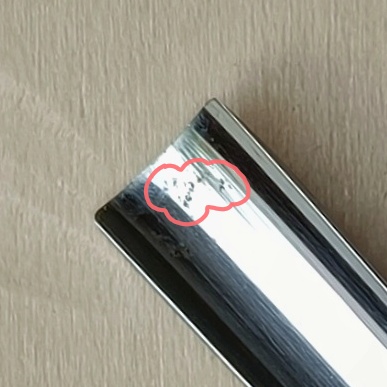
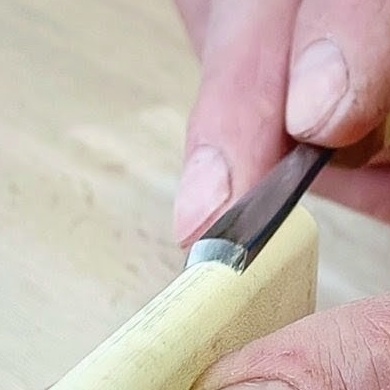
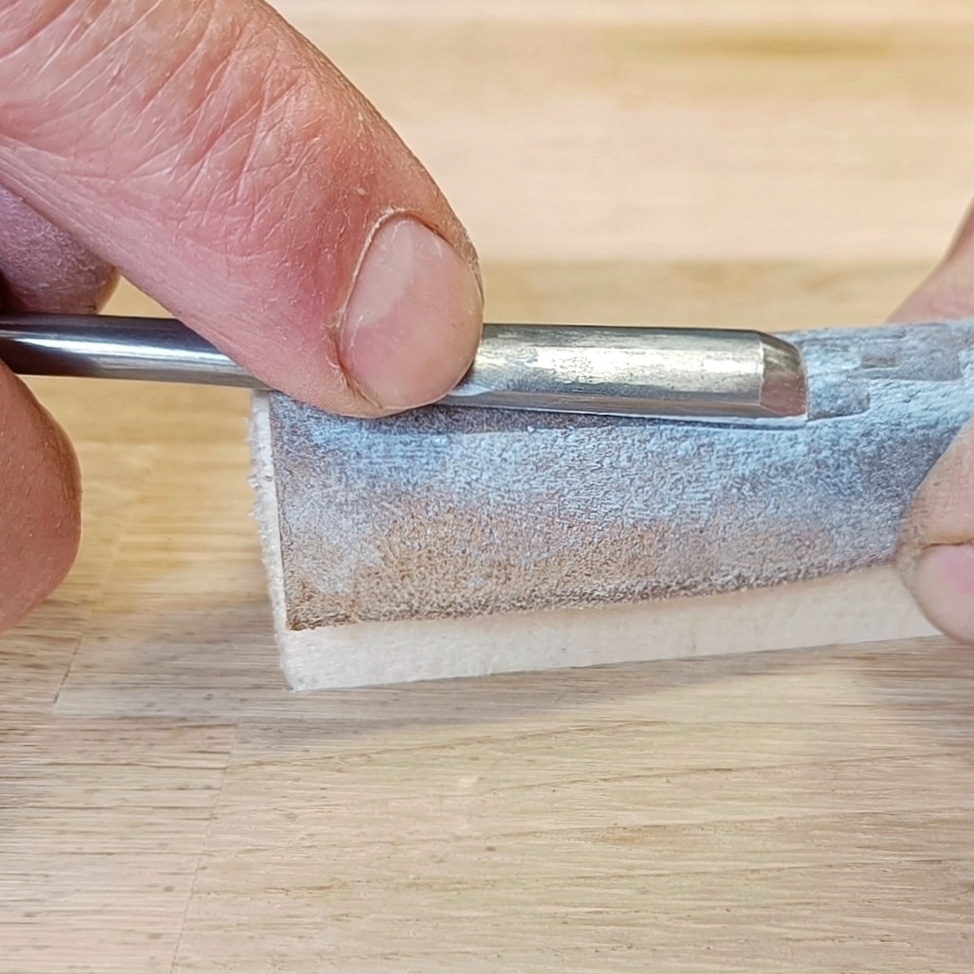
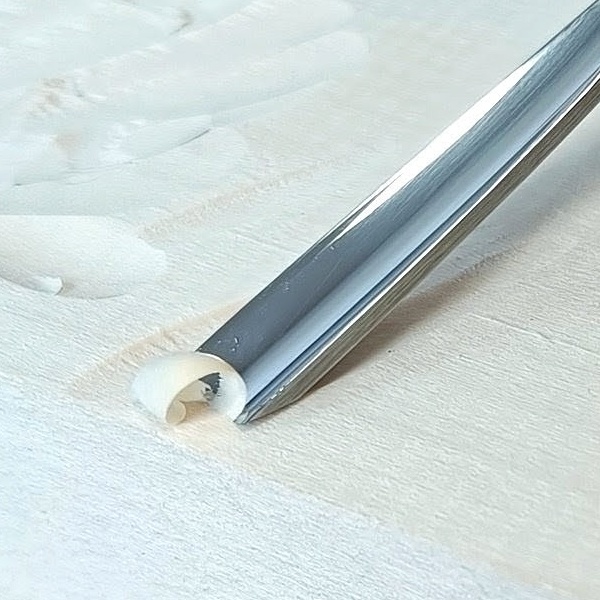
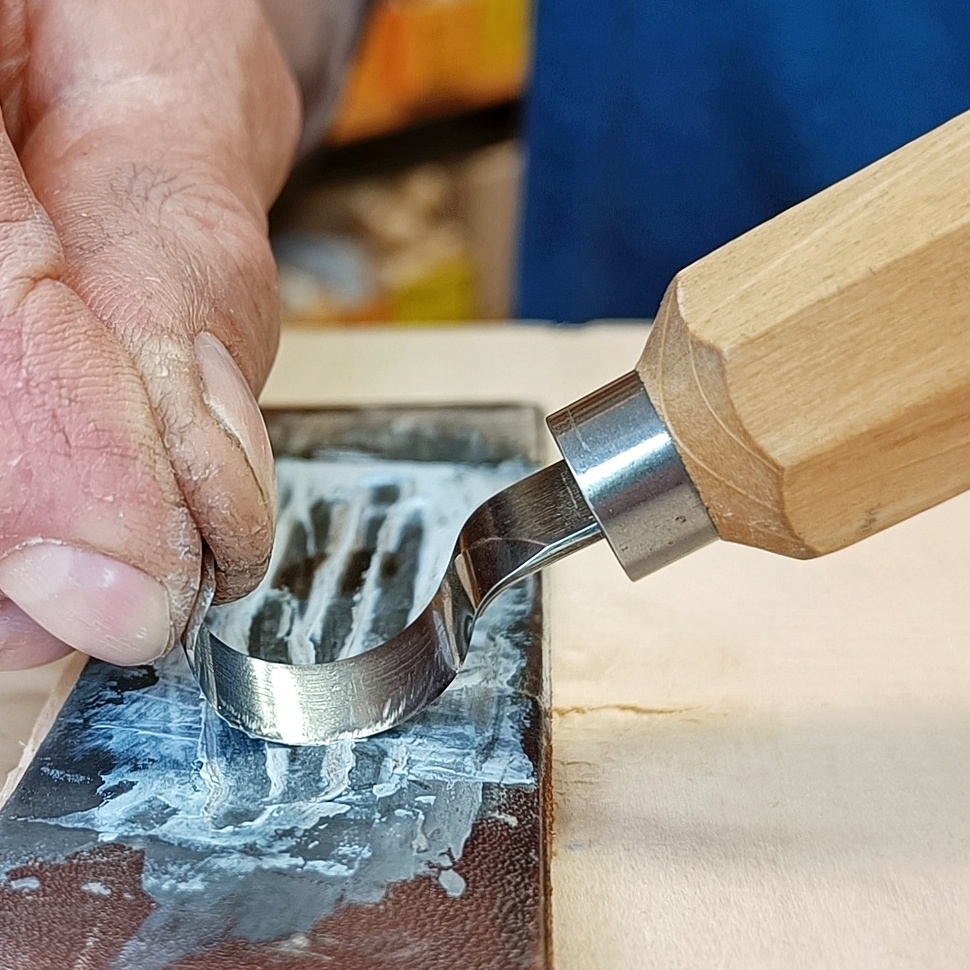
The gouge in the photo needed sharpening and also had visible signs of rust on the inside of the blade. We therefore sharpened the outer side of the blade on a two-layer M-stein #3000/8000 whetstone—first on the coarser layer and then on the finer layer—and then polished it using Unipol paste. We first honed the rust-affected inner part on a fine, teardrop-shaped Tyrolit stone, which is designed to fit contoured blades. We then polished the inner part on leather using Unipol paste. Since the blade is not straight, we made a wooden jig with a similar profile, placed the leather on it, and polished the blade from the inside. The inner part of the blade can also be polished using paste applied to a shaped piece of soft wood or a rough piece of leather.
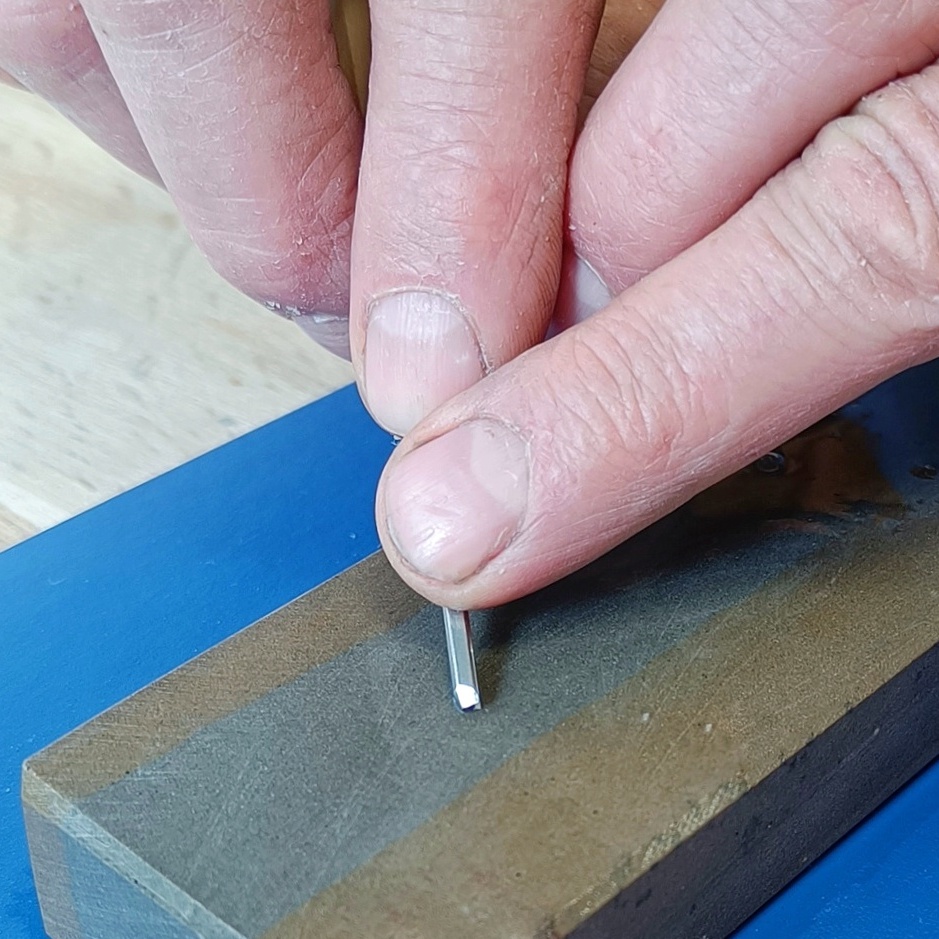
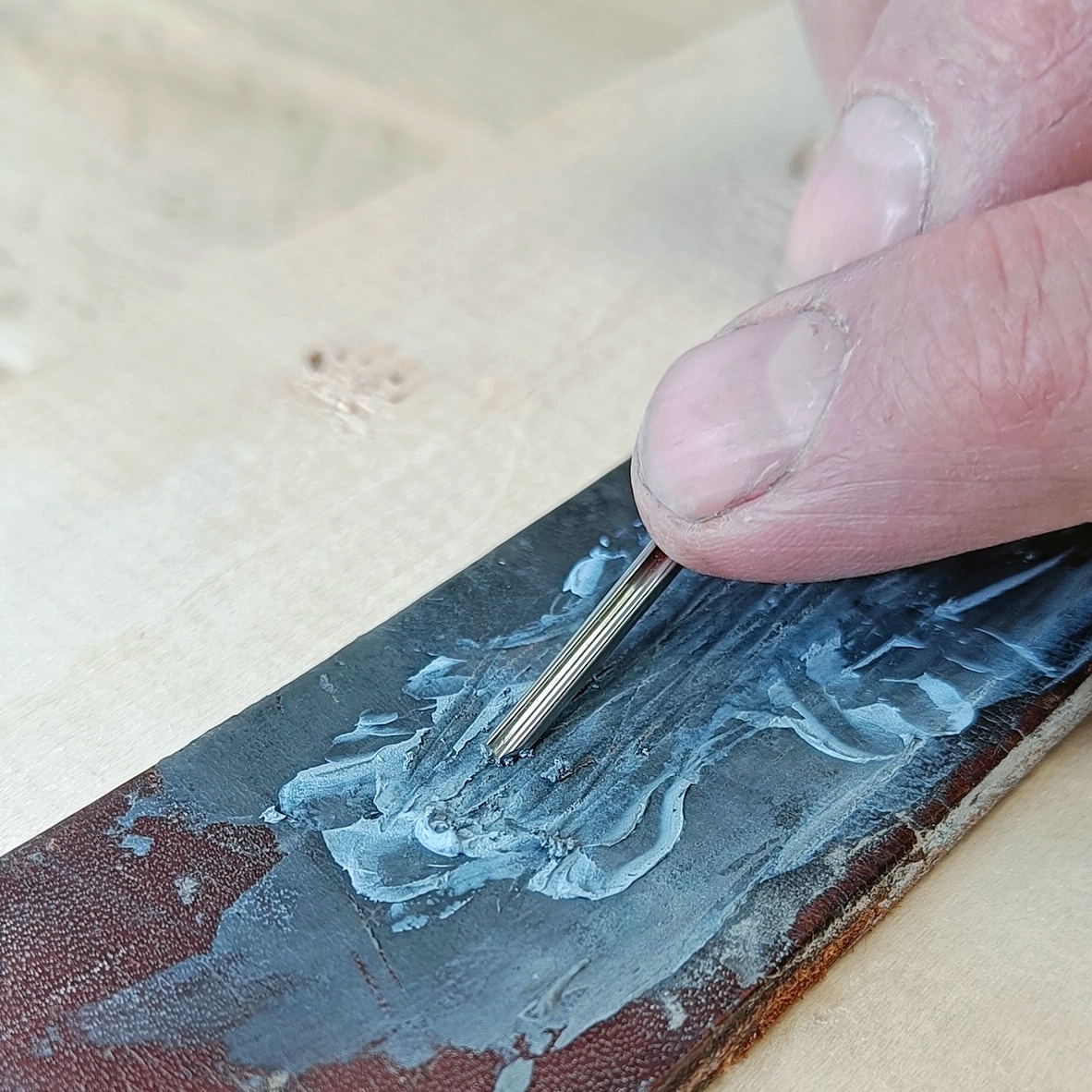
Small “V” carving gouge LO 11/1
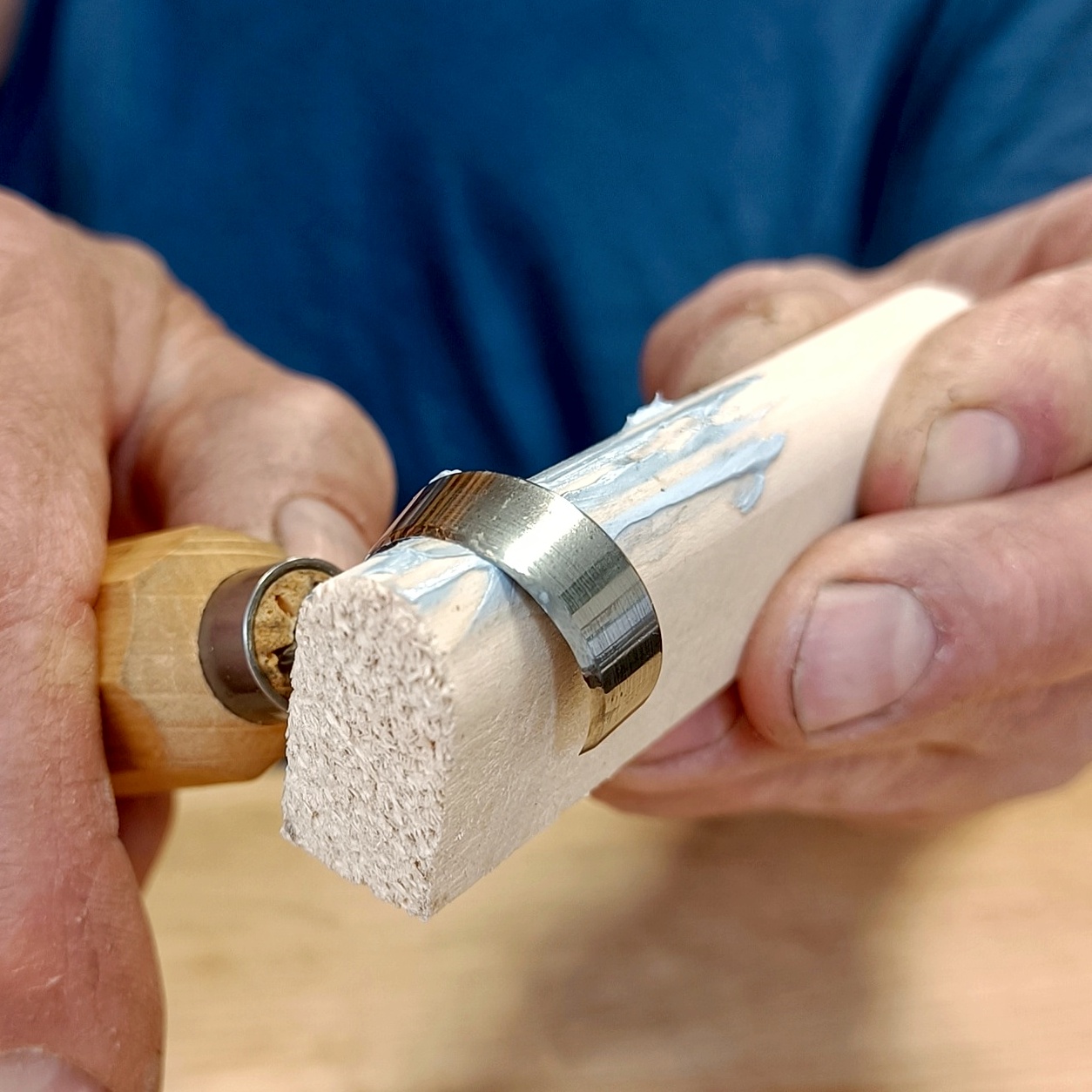
We sharpened the outer part of the blade of the narrow U-chisel on a two-grit whetstone (#3000/8000) and then polished it using Unipol paste applied to a piece of leather. We polished the inner part of the blade using paste applied to a tool we had made from a piece of soft wood, shaped to fit the blade.
Spooncarving knife 20P
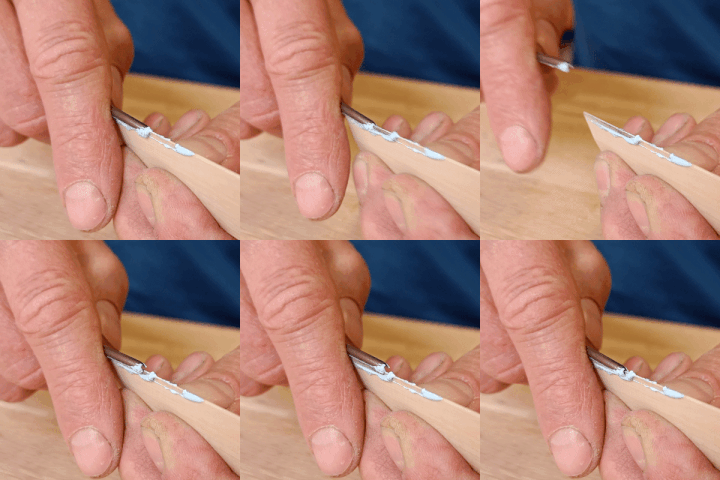
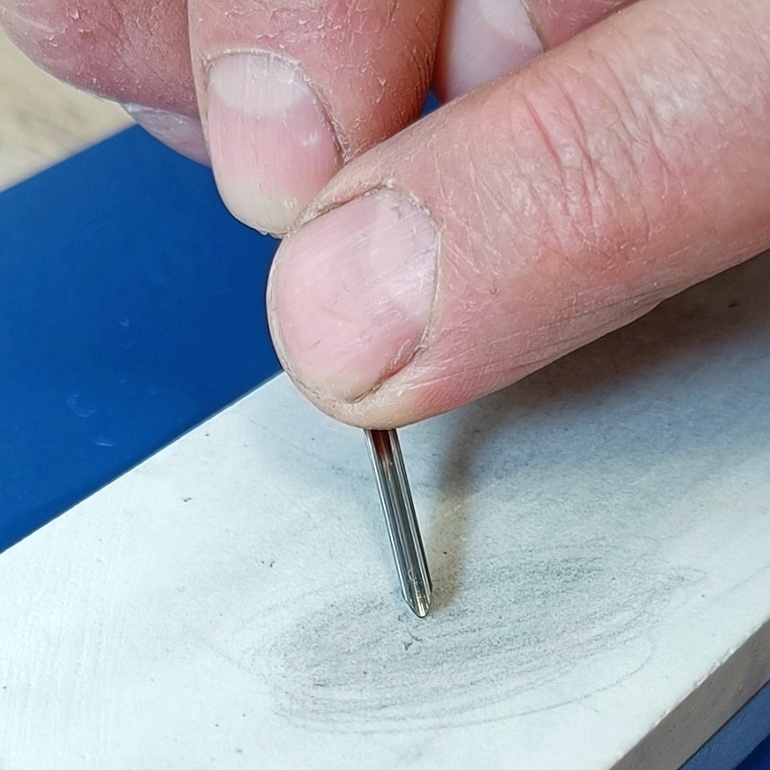
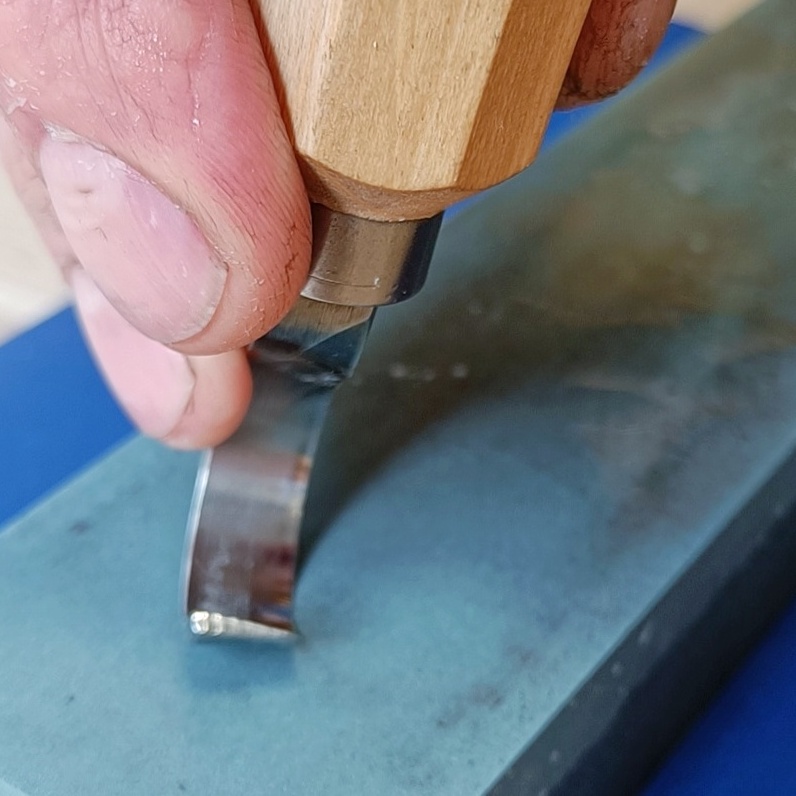
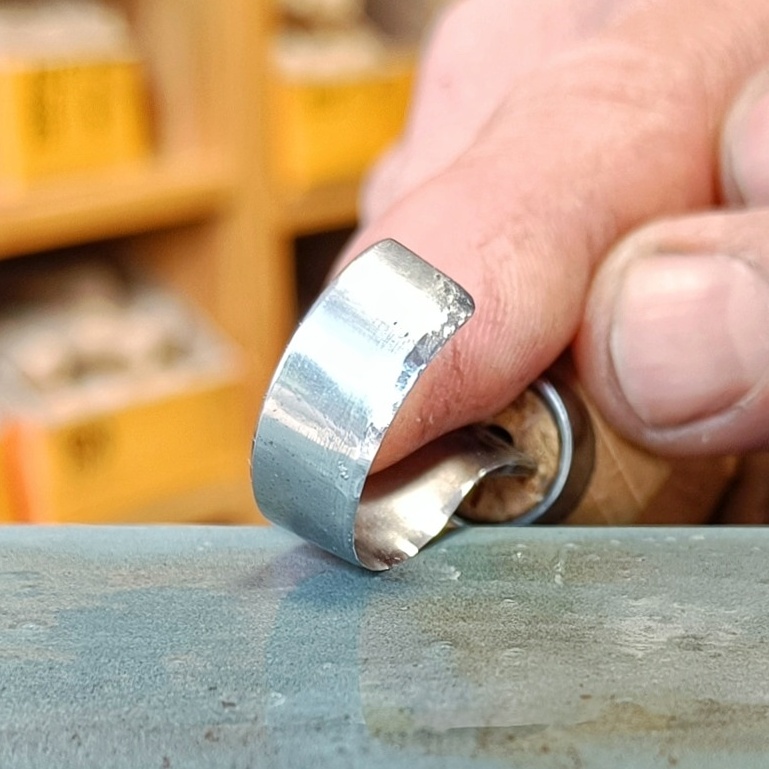
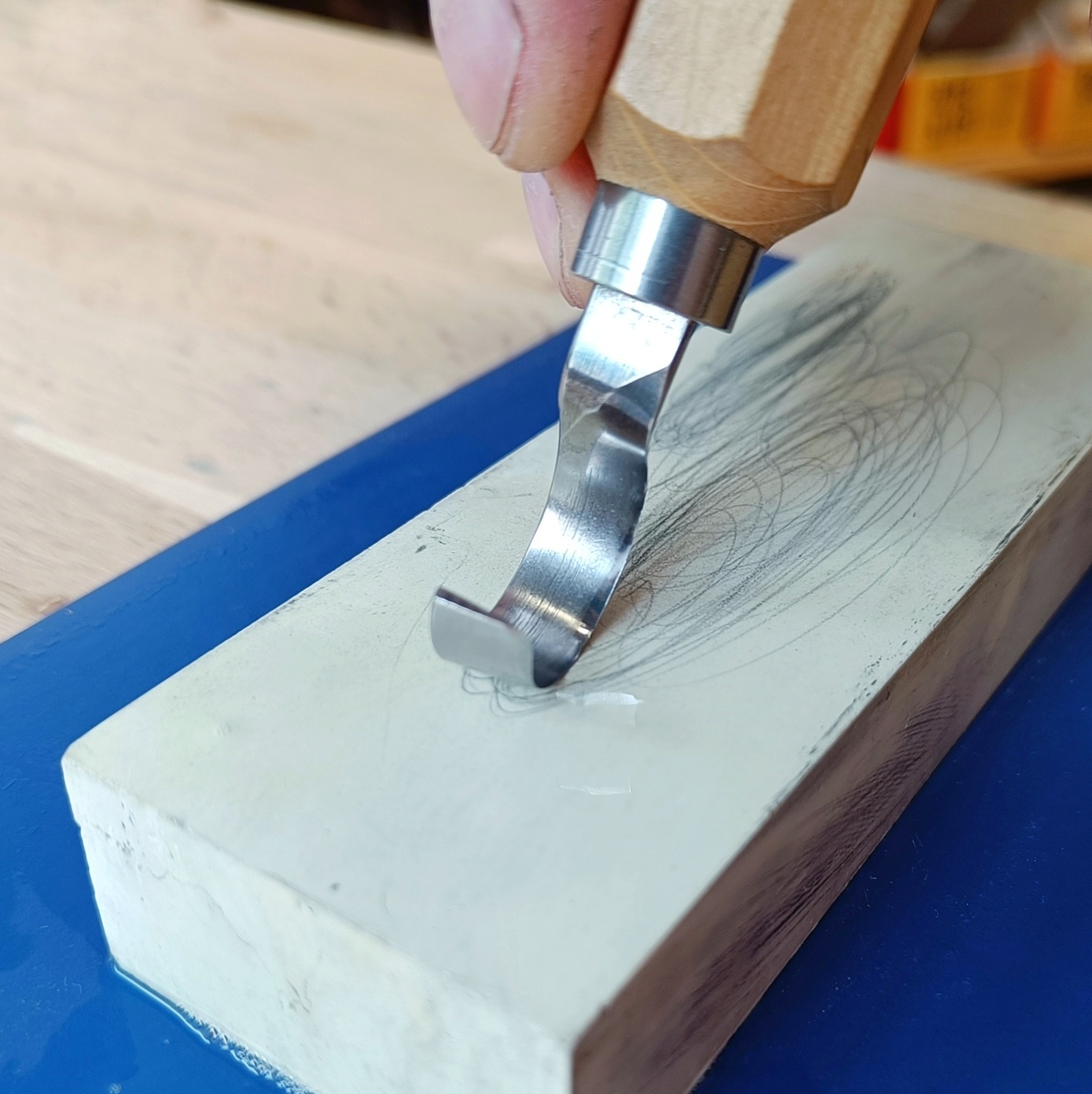
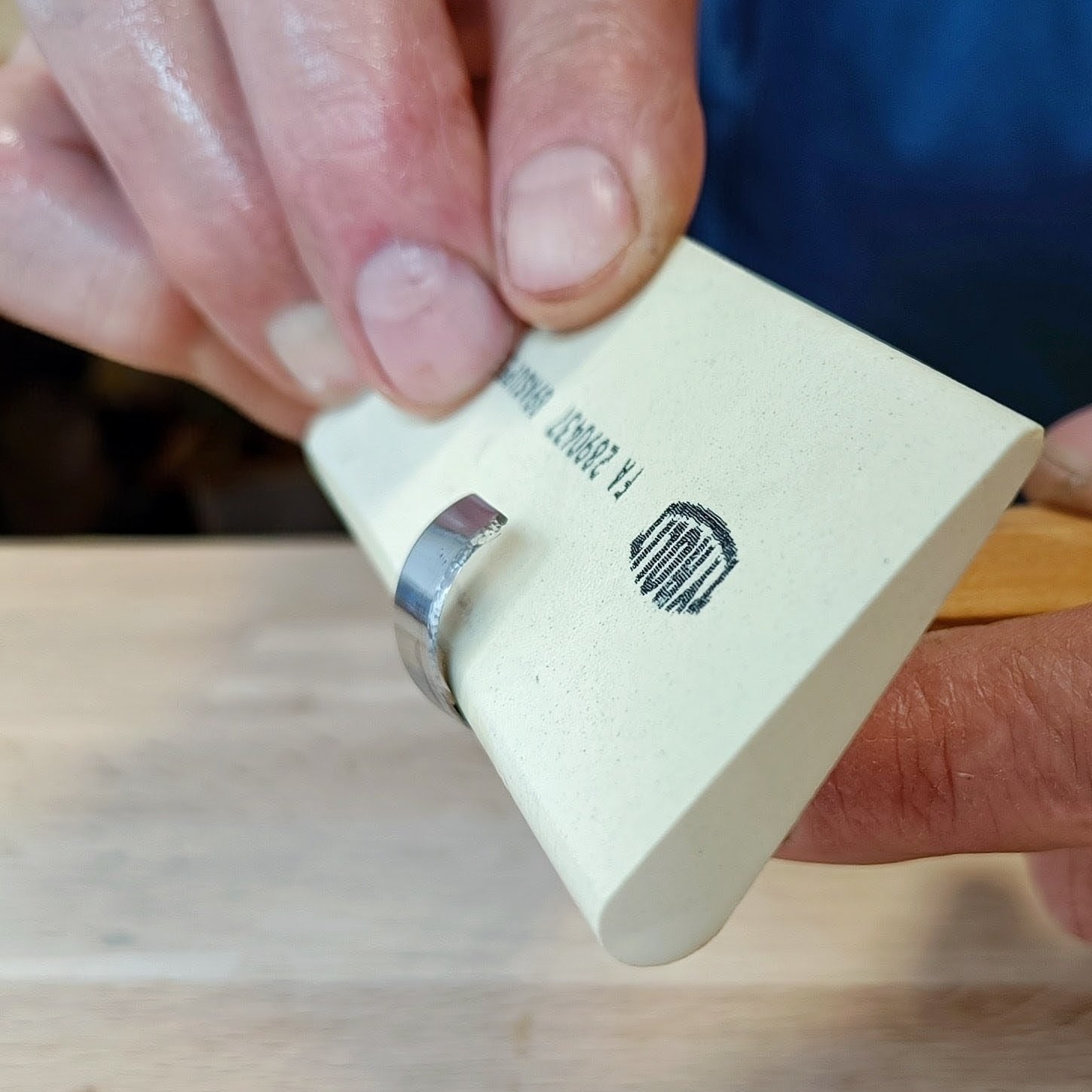
We photographed two scenarios – if the spoon is worn down, we grind the outer part of the blade first on a green Tyrolit and then on a white Tyrolit, before polishing it. If you just need to sharpen it, we grind it on a double-layered whetstone and then simply polish it on leather.
We hone the inner part of the blade using a fine, teardrop-shaped white Tyrolit and polish it with paste applied to a tool we’ve made from a piece of soft wood, shaped to match the blade.
Wish you enjoyable work with M-stein tools.